
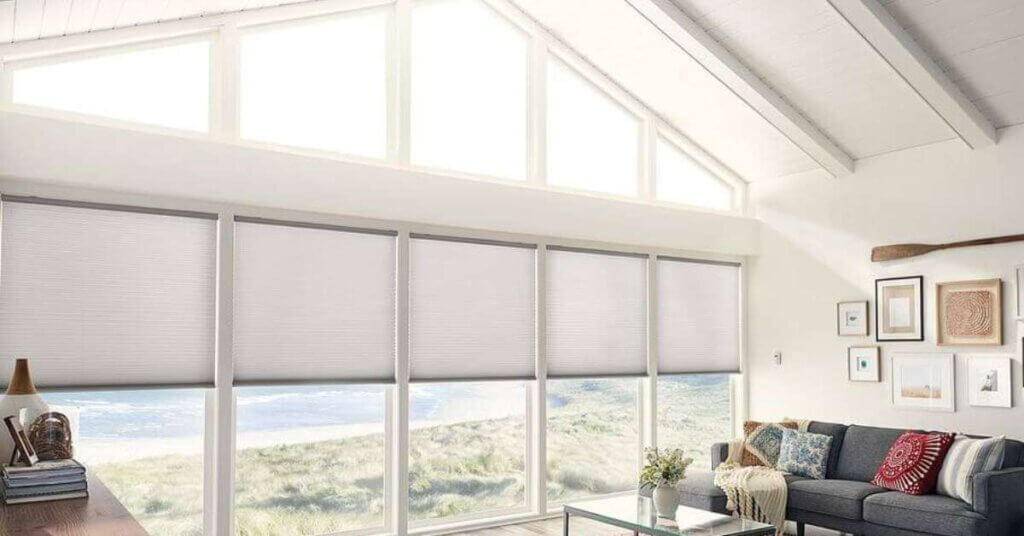
The best summer window treatments for Little Rock homes reduce heat, control glare, and protect interiors from UV exposure. Cellular and solar shades can improve comfort, while shutters, thermal drapery, and awnings offer additional protection.
The right option depends on the window direction and privacy needs. Consider how much cooling support each room requires before choosing a product.
What Little Rock Homes Need
Hot, humid summers can make uncovered windows a major source of discomfort. West-facing glass often creates strong afternoon heat, while patio doors may increase glare and force the cooling system to work harder.
Effective treatments should provide blocking or filtering without making rooms feel closed off. Custom measurements matter because side gaps can weaken insulation and allow sunlight to reach flooring or furniture.

Best Indoor Options
Cellular and Honeycomb Shades
Cellular shades use honeycomb pockets to trap air near the glass. This structure adds insulation and helps rooms stay cooler. Cordless models suit homes with children, while motorized controls make tall windows easier to operate.
Light-filtering material works well in shared spaces. Room-darkening fabric suits bedrooms, and double-cell construction may provide stronger thermal performance.

Solar and Roller Shades
Solar shades reduce glare and UV exposure while preserving part of the outdoor view. A lower openness factor provides more protection, while a higher factor keeps the view clearer.
Roller shades offer a simple profile and can use reflective or protective materials. Smart motorized shades can close before peak afternoon sun, helping limit heat before it builds indoors.

Shutters and Blinds
Plantation shutters provide adjustable light control through movable louvers. Composite shutters handle humidity well and create a fitted barrier around the window.
Curious how shutters hold up beyond just summer? Here’s how they support year-round energy efficiency, not just the hot months.
Faux wood blinds offer similar control at a lower cost. They resist moisture better than natural wood, though slat gaps may provide less insulation than cellular shades or lined curtains.

Curtains and Thermal Drapery
Curtains improve cooling when paired with a thermal lining. Custom drapery works well across wide windows or sliding doors. Panels that extend beyond the glass provide stronger coverage.

Exterior Heat Control
Awnings, Tint, and Film
Retractable awnings stop sunlight before it reaches patio doors or large windows. They can reduce indoor heat and make outdoor seating more comfortable.
Window tint or solar film reduces UV rays and glare without adding another interior covering. Film works best in a layered plan because it does not provide adjustable privacy.

Choosing the Right Treatment
Start with the hottest room, noting when discomfort begins and considering window direction and privacy needs. Layered treatments may work best because solar shades manage daytime glare, while curtains provide evening privacy.
Frequently Asked Questions (FAQs)
Should every room use the same summer window treatment?
No. West-facing rooms may need solar shades, while bedrooms may benefit more from cellular shades or lined drapery.
Do solar shades provide nighttime privacy?
Not always. Interior lights can make rooms visible from outside, so drapery or another privacy layer may be needed.
Is an inside or outside mount better for reducing heat?
Outside mounts cover more glass and reduce side gaps. Inside mounts offer a streamlined look but require precise measurements.
Can smart shades reduce cooling costs?
They can support cooling by closing before peak sunlight reaches the glass. Results depend on the window size and the selected material.
How should window treatments be maintained during humid Arkansas summers?
Dust blinds and shades regularly. Wipe composite shutters or faux wood blinds with a damp cloth and inspect awnings after strong storms.
A Cooler Plan for Summer

The best summer window treatments should address the problem at each opening. Some rooms need stronger insulation, while others need glare control or exterior shade. A professional evaluation can help you compare practical options without paying for features that do not fit your needs.
Made in the Shade Little Rock provides custom measuring and product guidance for local homes. Schedule an in-home consultation to compare shades and shutters. You can also review blinds and drapery, along with exterior awnings, under your actual lighting conditions.