
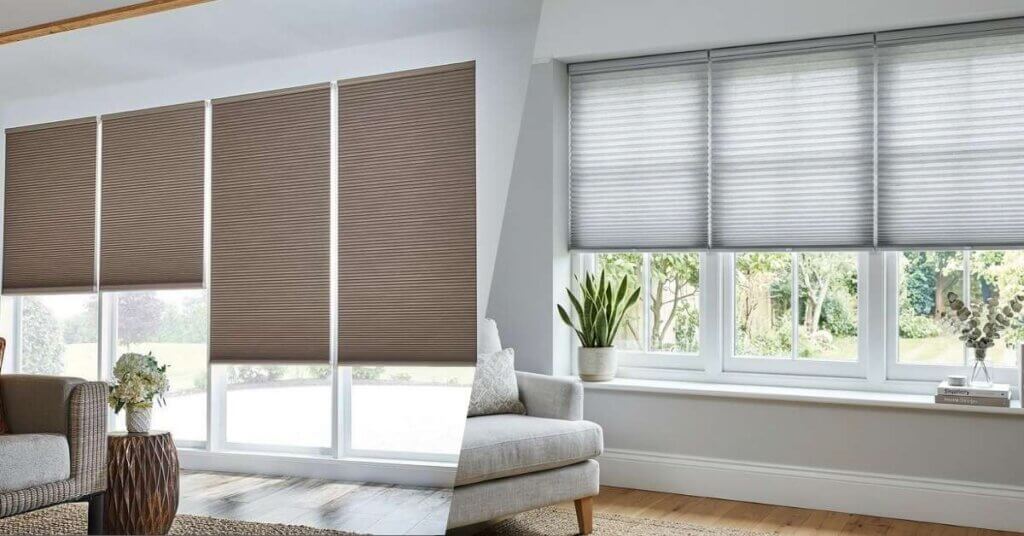
When comparing cellular shades vs. pleated shades, the main differences lie in structure, insulation, and overall performance. Cellular (or honeycomb) shades are designed for energy efficiency with air-trapping cells, while pleated shades focus more on style and simplicity. Both offer light filtering and privacy, but the right choice depends on your priorities, whether that’s thermal insulation or decorative appeal.

Understanding the Core Design Differences
Cellular Shades: Built for Performance
Cellular shades, also known as honeycomb shades, feature a unique cellular structure that forms pockets of air. These cells act as insulation between your window and the interior space.
Pleated Shades: Designed for Style
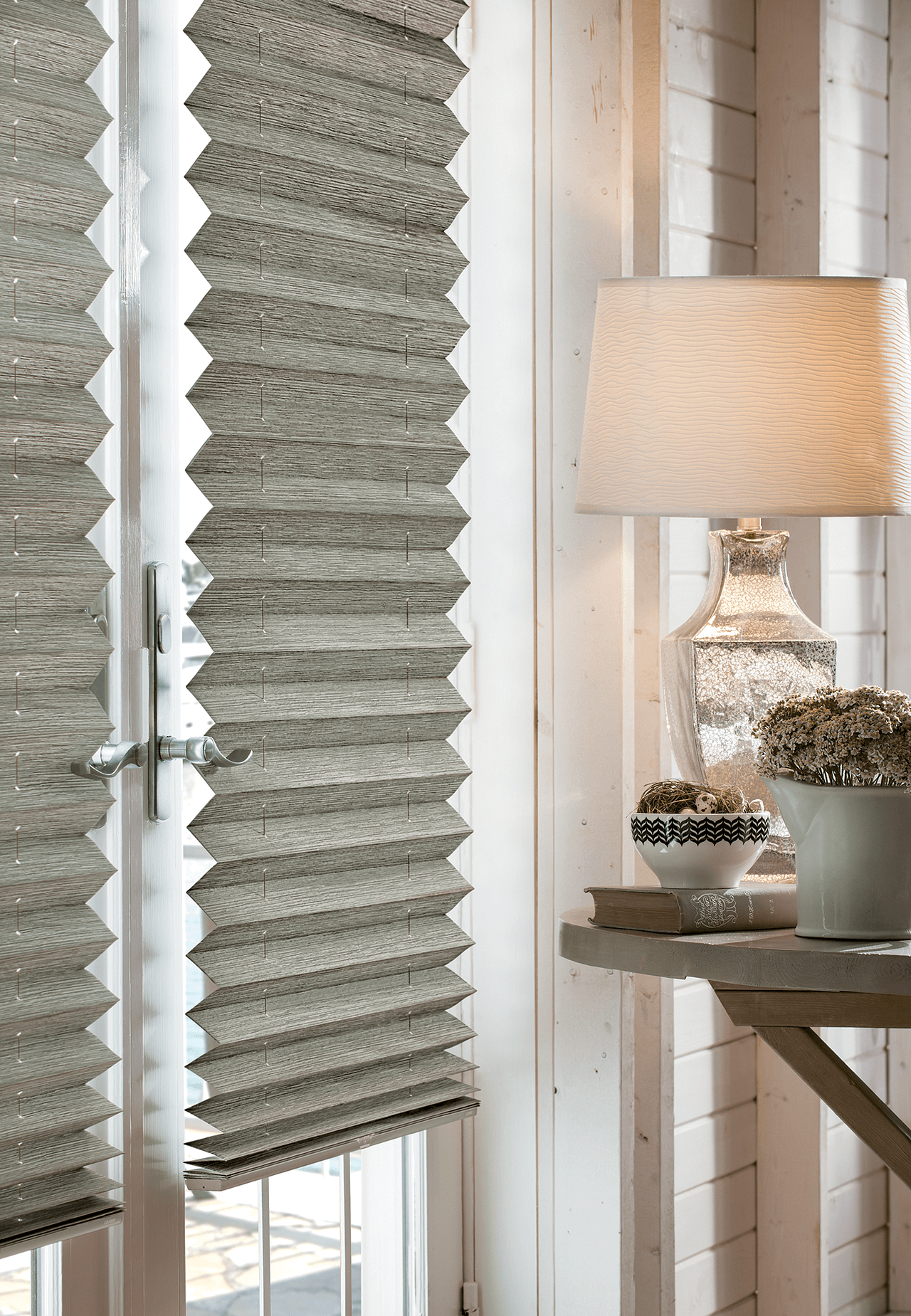
Pleated shades use a single layer of fabric folded into crisp, accordion-style pleats. Unlike cellular shades, they don’t have internal air pockets.
Cellular vs. Pleated Shades: Side-by-Side Comparison
Feature | Cellular Shades | Pleated Shades |
Structure | Honeycomb cells | Single-layer pleats |
Insulation | Excellent thermal performance | Minimal insulation |
Energy Efficiency | High | Moderate |
Light Control | Light filtering to blackout | Mostly light filtering |
Privacy | Strong with proper opacity | Moderate |
Style | Clean, modern | Decorative, textured |
Cost | Higher investment | More budget-friendly |
Energy Efficiency and Insulation
Why Cellular Shades Stand Out
If energy savings matter, cellular shades are hard to beat. Their thermal design reduces heat transfer, helping maintain indoor temperatures year-round.
Benefits include:
- Lower energy bills through improved insulation
- Reduced heat gain in summer and heat loss in winter
- Better overall indoor comfort
Where Pleated Shades Fit
Pleated shades still provide basic coverage but lack the insulating cells for high‑performance energy efficiency.
Discover which window treatments offer the best energy efficiency for your home. Read here.

Light Control, Privacy, and Opacity Options
Both window treatments offer flexible light control, but there are differences:
Cellular Shades
- Available in light-filtering and blackout fabrics
- Better room darkening due to structured design
- Enhanced privacy, especially in double-cell options
Pleated Shades
- Typically light filtering
- Limited blackout options
- Ideal for soft, diffused light rather than full coverage

Design, Aesthetics, and Interior Appeal
Choosing Based on Style
Your interior design plays a big role in the decision.
- Cellular shades:
- Sleek, minimal, and modern
- Blend seamlessly into contemporary interiors
- Pleated shades:
- Add texture and visual interest
- Works well in traditional or layered designs
Both can be customized with different fabrics, colors, and hardware, making them versatile custom window coverings.

Ease of Use and Customization
Modern upgrades make both options user-friendly:
- Cordless designs improve safety and clean appearance
- Custom sizing ensures a perfect fit for any window
Cellular shades tend to feel more structured and durable, while pleated shades are lighter and easier to adjust manually.

Which One Should You Choose?
Here’s a quick way to decide:
Choose cellular shades if you want:
- Maximum insulation and energy savings
- Better privacy and blackout performance
- A clean, modern look
Choose pleated shades if you want:
- A more decorative, textured appearance
- A cost-effective window covering
- Soft, filtered natural light
FAQs About Cellular Shades vs. Pleated Shades
1. Are cellular shades worth the higher cost?
2. Do pleated shades provide enough privacy?
3. Can both options be motorized?
4. Which is better for large windows?
5. Are there blackout options for both?
Final Thoughts: Finding the Right Fit for Your Space
Choosing between cellular shades vs. pleated shades comes down to balancing performance and design. If your priority is energy efficiency, insulation, and improved comfort, cellular shades offer a clear advantage. On the other hand, pleated shades deliver a stylish, lightweight solution that enhances your interior without a higher investment.
Both options can be customized to match your home’s style while improving privacy and light control. For personalized guidance, MITS Little Rock can help you compare fabrics, opacity levels, and features to find the perfect window treatment for your space. Contact us or schedule a consultation today.